Development of Photocatalysis Technology and Its Applications for Everyday Life
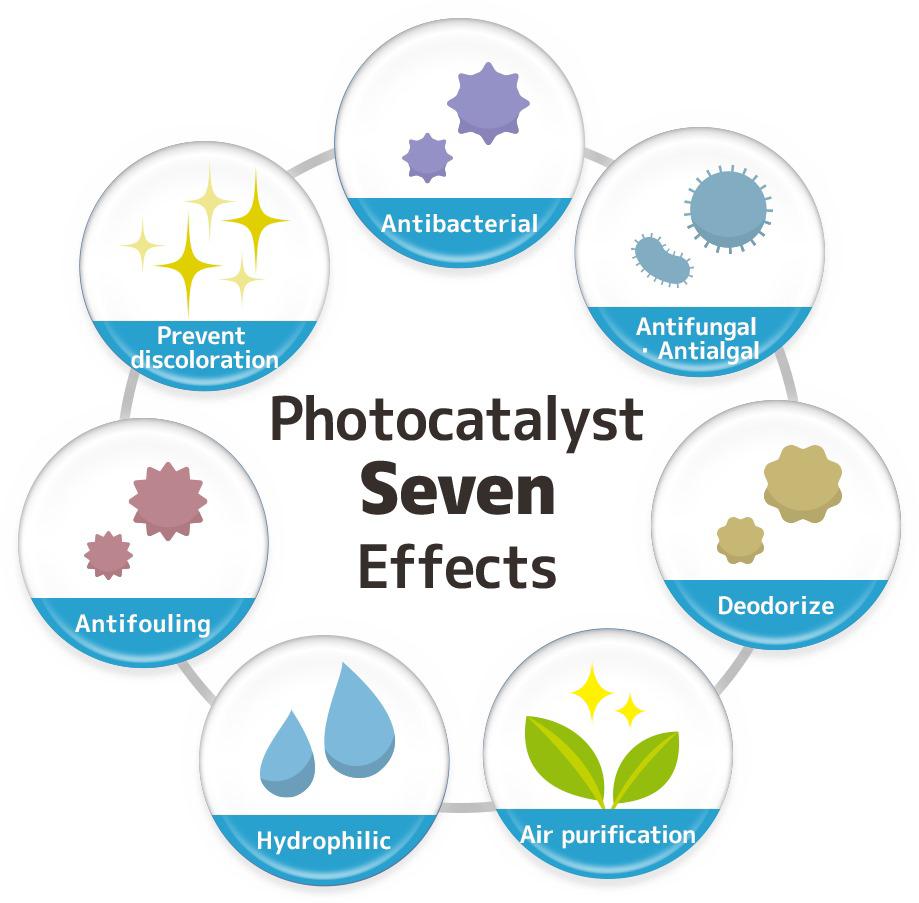
In a world that is constantly changing and evolving, we are faced with significant challenges in the realms of the environment and energy. One increasingly captivating and promising solution is photocatalysis technology. In this section, we will elucidate the fundamental principles of photocatalysis technology, including the basic concept of photokinetic reactions, the photocatalytic process, and the influence of sunlight and types of light on photocatalysis.
The Fundamental Concept of Photocatalytic Reactions
Photocatalysis technology is rooted in the phenomenon of photokinetic reactions. The term "photokinetics" itself refers to chemical reactions triggered by light. This concept plays a pivotal role in photocatalysis, where light acts as a catalyst to initiate or accelerate specific chemical reactions.
This phenomenon is based on the nature of subatomic particles known as photons. Photons are the fundamental units of light, possessing sufficient energy to stimulate electrons within atoms or molecules. When light falls upon a material, such as a photocatalyst, photons can excite the electrons in those atoms or molecules, causing them to transition from their ground state to higher energy levels.
This process creates a highly reactive state and enables chemical reactions that might otherwise be impossible under normal conditions. In other words, photocatalysis enhances the efficiency of chemical reactions and transforms them into exploitable processes.
Photocatalysis Process and Reaction Mechanism
The photocatalysis process occurs when a substance is exposed to light, producing electrons that are "excited" or have enough energy to interact with other molecules in the environment. One of the most famous examples of photocatalysis is the degradation of organic compounds in water with the assistance of sunlight.
The mechanism of photocatalytic reactions involves several steps, such as:
-
Light absorption: Photocatalysts absorb photons from light, stimulating electrons in the photocatalyst to move to higher energy levels.
-
Formation of electron-hole pairs: The stimulated electrons form pairs with electron holes (the locations from which the electrons moved).
-
Reaction with target molecules: Electron-hole pairs can participate in chemical reactions with target molecules present in the system.
-
Recovery of photocatalyst: After the reaction is complete, the electrons that have participated in the chemical reaction can return to their ground energy level, and the photocatalyst can be reused.
This mechanism repeats itself as long as the photocatalyst is exposed to light, allowing chemical reactions to occur continuously.
Influence of Sunlight and Types of Light on Photocatalysis
Sunlight is the most common natural light source used in photocatalysis applications. However, the type of light used can also affect photocatalysis efficiency. Sunlight contains various wavelengths of light, and different photocatalysts have different absorption spectra. Therefore, some photocatalysts are more effective at absorbing light of specific wavelengths, while others are more efficient at different wavelengths.
In addition to sunlight, artificial light sources such as UV lamps are often used in photocatalysis experiments. UV light has higher energy than other lights, making it more efficient at stimulating electrons in the photocatalyst. This can enhance reaction rates in photocatalysis applications.
Applications of Photocatalysis Technology in Daily Life
Photocatalysis technology has created a revolution in various aspects of human life, with a variety of applications that continue to evolve. In this section, we will explore some key applications of photocatalysis technology that have changed the way we manage resources and the environment, and have made significant contributions to the healthcare sector.1. Clean Water Treatment
One of the primary applications of photocatalysis technology is in clean water treatment. Access to clean water remains an unmet basic need for millions of people worldwide. Photocatalysis plays a crucial role in addressing this issue by removing contaminants and pollutants from water, including organic compounds, heavy metals, and pathogenic bacteria.
Photocatalysis technology uses sunlight or UV lamps as an energy source to activate photocatalysts, such as titanium dioxide (TiO2), which then oxidize and decompose pollutants in water into safer compounds. The result is cleaner and safer drinking water. This application has the potential to improve the quality of life in areas facing water crises.
2. Wastewater Treatment
In addition to clean water treatment, photocatalysis technology is also widely applied in industrial wastewater treatment. Many industries produce wastewater containing hazardous compounds that must be removed before being discharged into the environment. Photocatalysis helps address this issue by reducing the concentration of pollutants in wastewater to acceptable levels before release or further processing.
In this context, photocatalysis technology combines sustainability with economic efficiency. It helps companies comply with increasingly stringent environmental regulations and minimizes negative impacts on the surrounding environment.
3. Air Purification
Air pollution has become a growing global concern. Photocatalysis technology can be used to purify air by removing air pollutants such as nitrogen dioxide (NO2), volatile organic compounds (VOCs), and fine particulate matter that are harmful. In air purification applications, photocatalysis can be used in various forms, such as coatings on buildings and roadways, which help reduce pollutant concentrations in the surrounding environment. This provides significant health benefits to urban residents who are often exposed to air pollution.
4. Renewable Energy Development
Photocatalysis technology also plays a crucial role in the development of renewable energy. In this regard, photocatalysis is used in photochemical solar cells, which convert light energy into chemical energy that can be used to generate electricity. The use of photocatalysis in photochemical solar cells has inspired research in finding ways to improve their efficiency and stability. If successful, this could be a significant step toward replacing more environmentally hazardous conventional energy sources.
5. Applications in the Medical and Pharmaceutical Fields
Photocatalysis technology also holds great potential in the fields of medicine and pharmaceuticals. Photocatalysis can be used to efficiently produce chemical compounds that can be used in drug synthesis and other medical chemicals. Additionally, photocatalysis is used in the sterilization of medical equipment and the purification of water in healthcare facilities.
In recent research, photocatalysis has even been used to develop photodynamic therapy, where specific compounds are activated by light to destroy cancer cells or pathogenic microorganisms in the human body. This is an example of how photocatalysis technology can save lives and provide innovative solutions in the field of healthcare.
With all the benefits of photocatalysis technology, NanomisT is now here for those who care about the health and cleanliness of their families and the environment. Want to order? Please contact us directly!